A child is more than the visible problem
Behavior, diagnosis, unfinished work, and test data matter—but none of them contains the whole child or explains the whole learning moment.
Children are known. Teachers can teach. Families are heard. Learning becomes real.
Samuel A. Spelsberg is discerning a small, relationship-rich learning community where teachers hold a strong academic map while knowing each child closely enough to find the doorway through which skill, understanding, confidence, and contribution can become real.
Noticing is not passive. It means seeing precisely enough to teach differently.
The final form is still open. It might become an independent learning studio, a program within an existing community, or a partnership that has not yet been imagined.
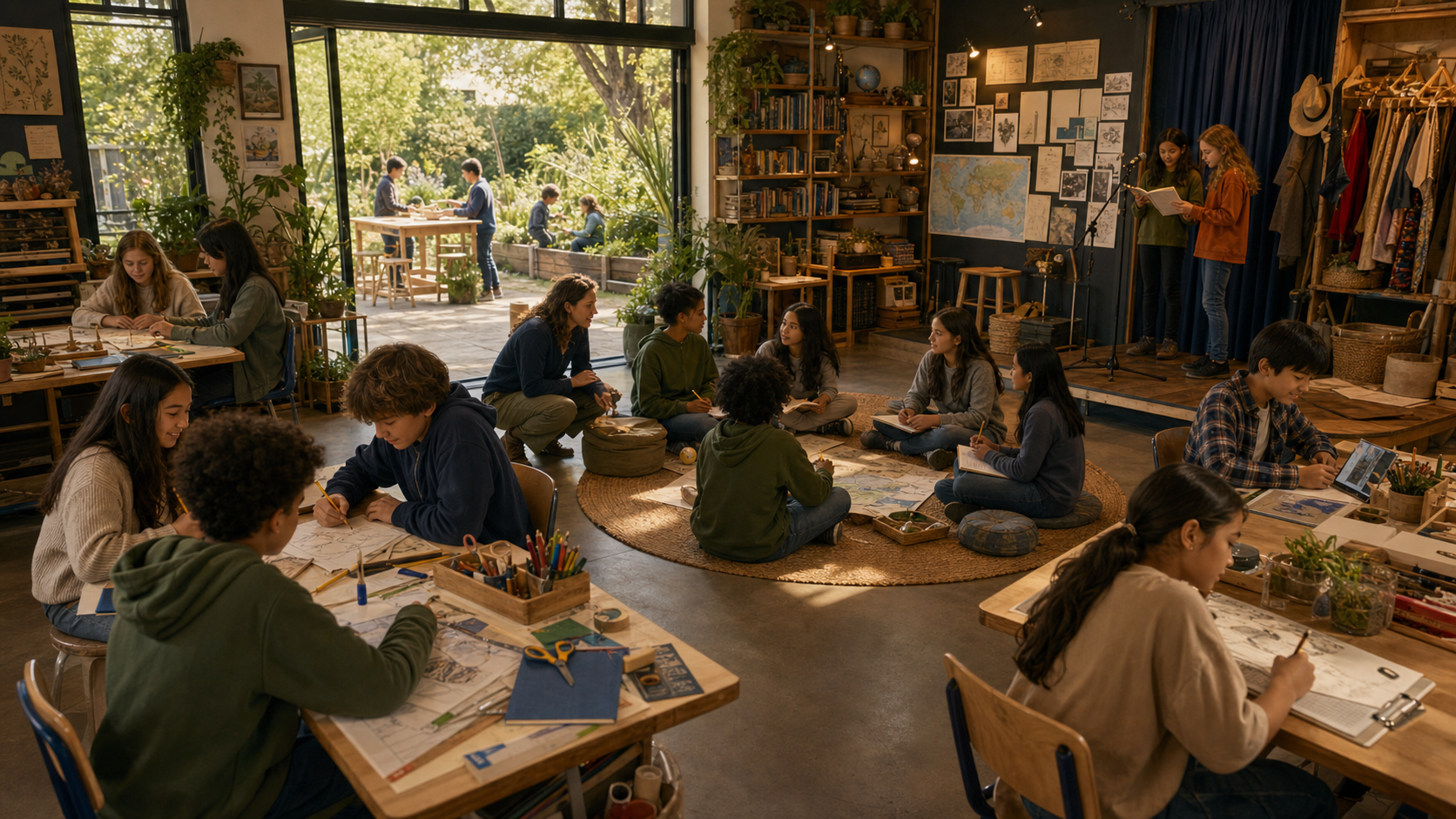
No school has been formed. There is no opening date, location, grade range, schedule, tuition, application, deposit, or reserved place. This page exists so families, educators, and potential supporters can recognize the direction without mistaking vision for progress already made.
During 2026–27, Sam's present commitment is a full-time Christian-school teaching role. The vision is being discerned in a way that can learn from and contribute to existing schools rather than presenting itself as their competitor.
Many children, families, and teachers are carrying more than the visible school day reveals. A better structure would not blame one group for the strain. It would make room to see clearly and respond before difficulty becomes identity.
Behavior, diagnosis, unfinished work, and test data matter—but none of them contains the whole child or explains the whole learning moment.
Families often see patterns, strengths, fears, and openings that a school cannot see alone. Partnership should change the response, not merely document a meeting.
Care cannot compensate forever for impossible loads, fragmented support, or too little time to observe, plan, collaborate, and repair.
A learner should not have to succeed through one prescribed format or be treated as unwilling or unable. There is a third possibility: preserve the learning target, understand what is blocking access, and build a truthful way into the work.
This is the repeatable teaching cycle beneath the vision. It protects agency without asking the child to carry the teacher's responsibility.
Identify the knowledge, skill, standard, or meaningful capacity the learner is being invited to develop.
Study the learner, the task, the environment, the adult pressure, and what changes participation.
Offer a small number of purposeful ways into the work through materials, story, movement, conversation, construction, or choice.
Follow the living engagement, then add modeling, explanation, practice, correction, and challenge where they are needed.
Record what the learner understood, made, explained, practiced, or repaired—not only whether the original format was completed.
Use the evidence, family knowledge, and team reflection to choose the next honest target and doorway.
An educator brings a literacy invitation. A child turns it into a handmade book. Instead of treating the new direction as off-task, the teacher notices reading, spelling, sequencing, science, design, and problem-solving emerging inside the work.
The teacher adds explicit work with sounds, letters, words, and sentences; helps the learner revise and complete the book; and records both what the child demonstrated and what still needs to be taught.
This composite illustrates recurring patterns from protected tutoring evidence. It is not a public account of any one child.
Not effortless, unstructured, or endlessly individualized. The aim is strong learning inside a community flexible enough to help different children enter it truthfully.
Adults study patterns without turning a hard moment into a permanent verdict about the learner.
Expectations remain meaningful while materials, pacing, first steps, groupings, and forms of participation can change.
Reading, writing, mathematics, science, history, art, faith, and practical skill meet in questions and projects worth pursuing.
Students make work that matters, share it with others, carry responsibility, and learn how to return when something breaks.
Sam's precision may help form the practice, but a responsible school would have to make that capacity structural. Children and adults both need more than a founder's energy.
Schedules must protect the work of noticing patterns, preparing thoughtful pathways, and reflecting on what actually happened.
Teams need common language, documentation, consultation, and honest correction so wisdom does not live in one person's intuition.
Small groups, responsible workloads, clear roles, and protected rest would matter as much as beautiful ideas.
If a future school promises specialized services or support, it must have qualified people, resources, safeguards, and partnerships to provide them truthfully.
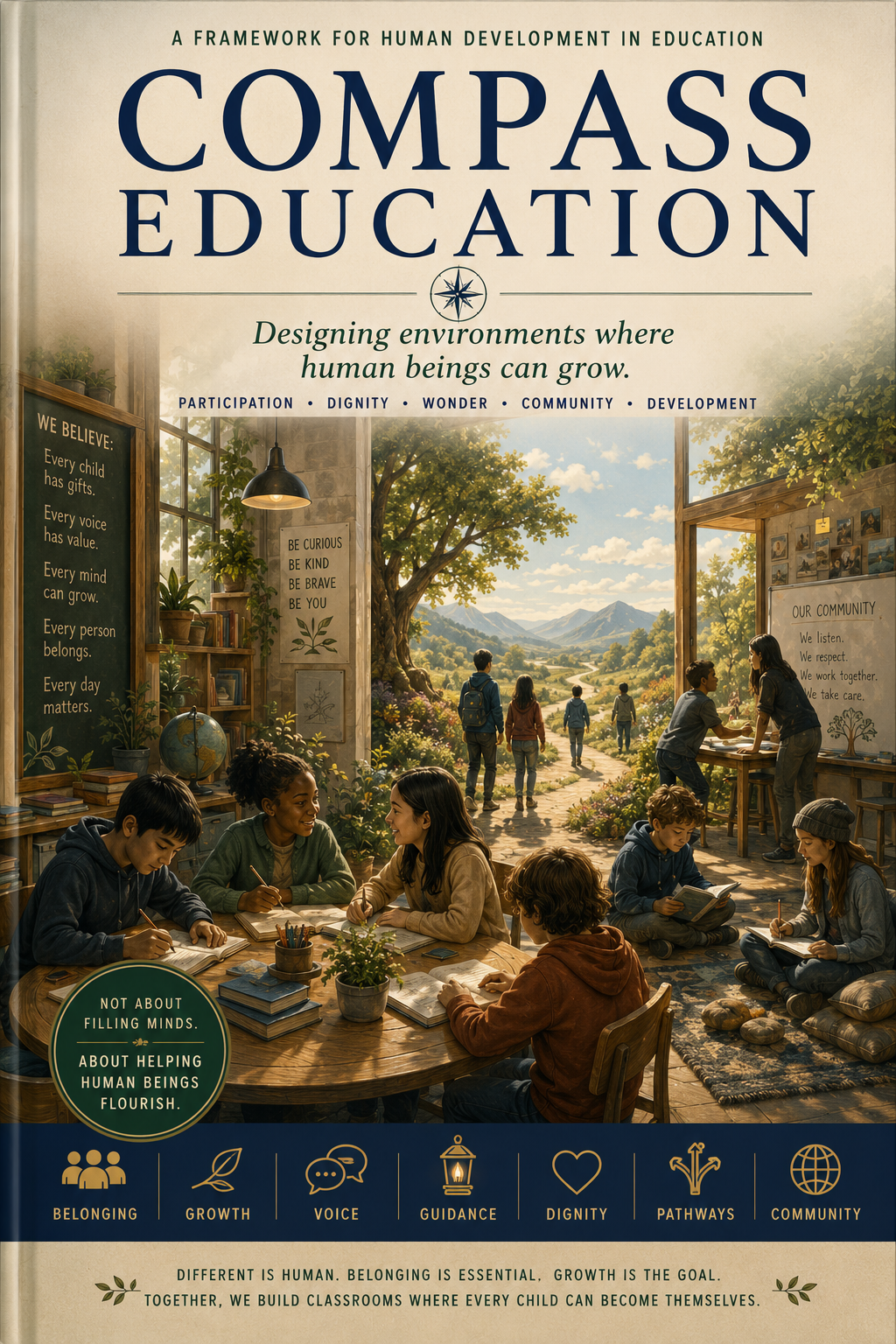
Certified in Elementary Education P-5 and Middle Grades 4-8 Language Arts, Math, and Social Science, with 21 years of experience across public, charter, private, early-childhood, and upper-elementary settings.
The future school is not yet real. The teaching practice, project design, teacher training, tutoring, classroom experience, and continued learning behind it are.
The vision should be clear enough to recognize and honest enough to correct.
Jesus is not used to brand the school or pressure belief. He is never treated as unwelcome or something that must be concealed.
Scripture, prayer, and honest questions about God, conscience, meaning, forgiveness, service, and hope can enter naturally within the life of the community.
Families, educators, community partners, business leaders, and potential supporters are welcome to begin a conversation about what this vision might require. This is an invitation to think and listen together—not an enrollment form, application, or fundraising campaign.