Notice precisely
Look at the child, the demand, the environment, the adult pressure, and the moment before deciding what the behavior means.
Children are known. Teachers can teach. Families are heard. Learning becomes real.
Samuel A. Spelsberg helps adults notice what is happening between a child, a task, and the learning environment—then find a doorway that protects dignity without giving up on growth.
Start with practical help for a hard classroom moment, learn how Sam approaches difficult learning, or explore the possibility of a future learning studio.
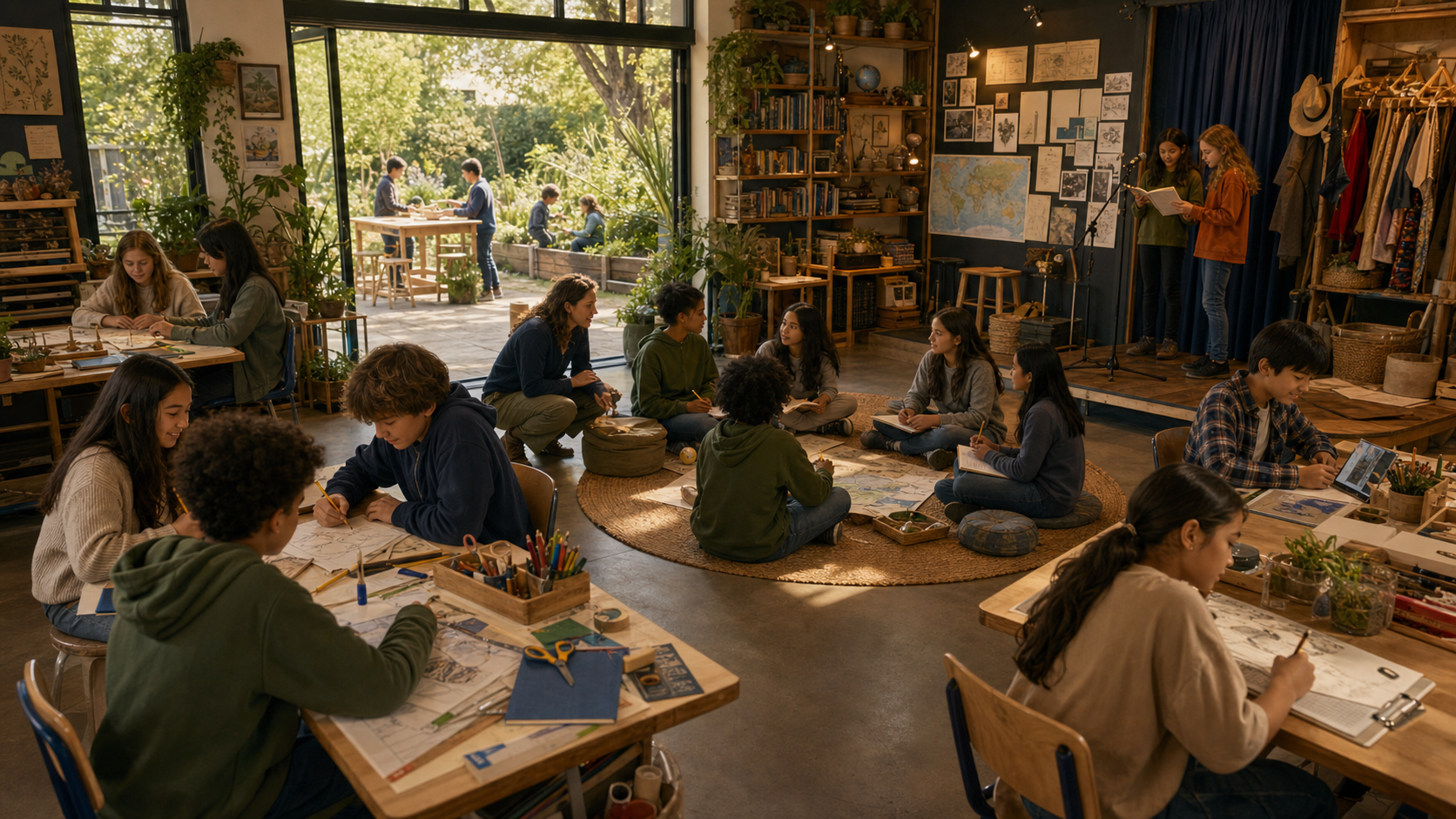
You do not have to understand a whole educational philosophy before finding something useful.
Use a short, practical reset when a student refuses, shuts down, or cannot find a way back into participation.
See the four moves beneath Sam's work: notice precisely, keep the target, change the doorway, and return through doing.
Explore a long-term vision for a small learning community. It is under discernment and is not currently a school or an enrollment offer.
The work is precise, but the center is simple: behavior gives information, the learning goal still matters, and the child needs a truthful way to re-enter.
Look at the child, the demand, the environment, the adult pressure, and the moment before deciding what the behavior means.
Support is not surrender. Hold onto the real learning while letting go of a power struggle that is blocking it.
Adjust the first step, the language, the materials, the audience, or the way a learner can begin—without erasing the goal.
Learning becomes real again through a manageable action: building, speaking, writing, trying, repairing, or contributing.
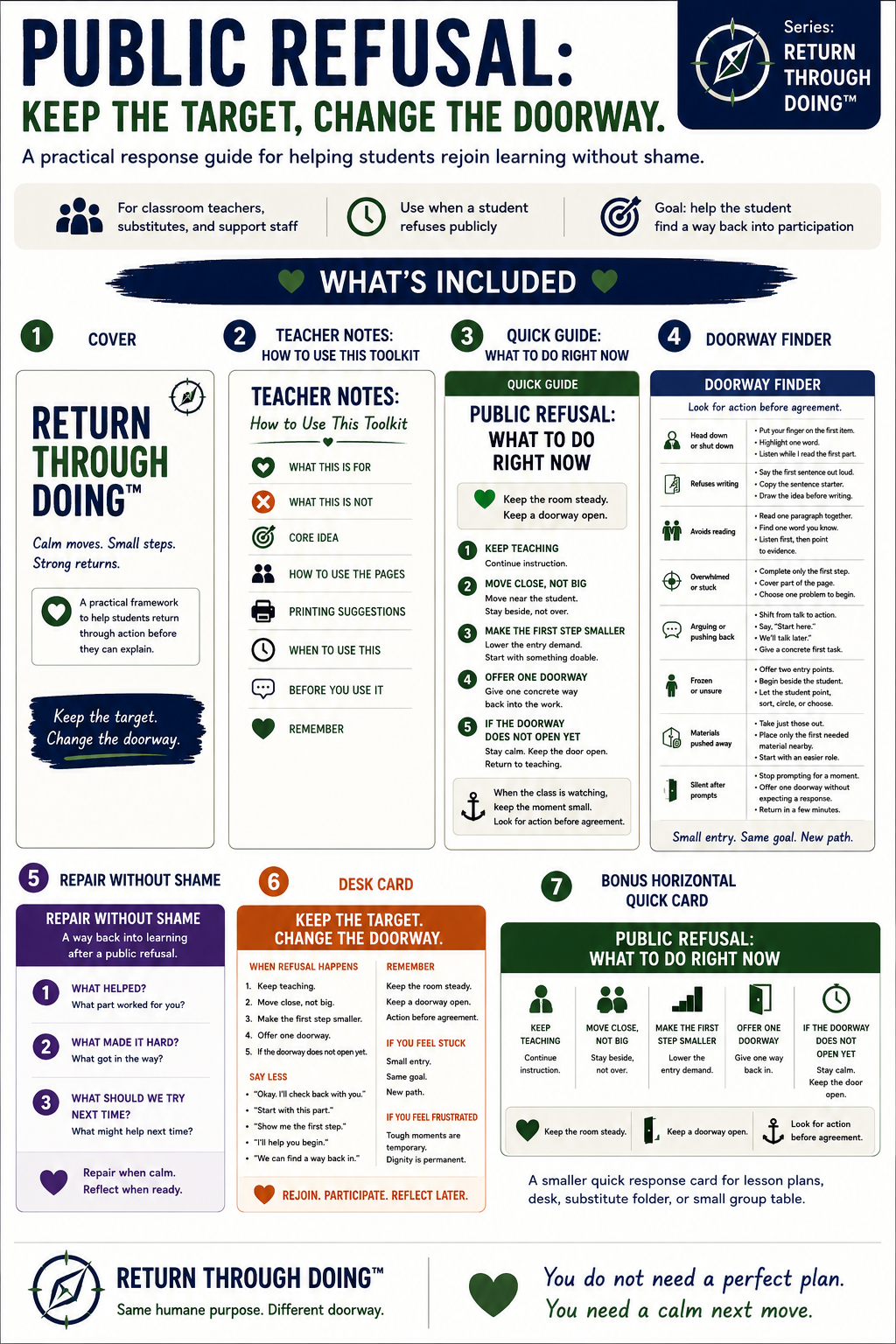
A student refuses publicly. Everyone is watching. The adult needs fewer words, a steady room, and one dignity-preserving next step.
Begin with the free classroom reset, or open the fuller printable toolkit for teachers, substitutes, and support staff.
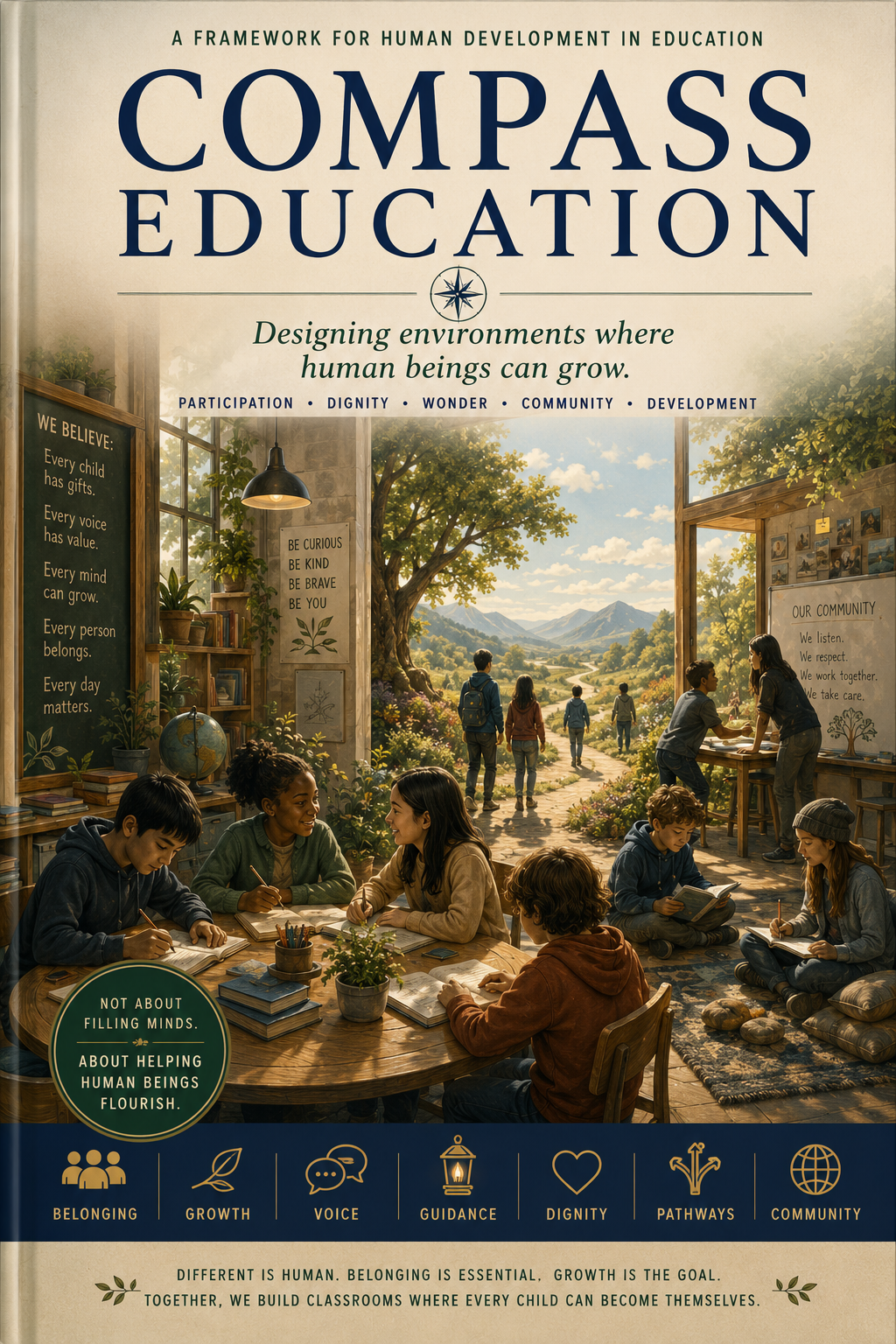
Sam is discerning a small, relationship-rich learning community where children can be known closely, teachers have the conditions to teach well, families are genuine partners, and strong learning can take more than one path.
This is a long-term educational vision—not a school launch, not an enrollment offer, and not a claim that the final form has been decided.
Sam is certified in Elementary Education P–5 and Middle Grades 4–8 Language Arts, Math, and Social Science, with 21 years of experience across public, charter, private, early-childhood, and upper-elementary settings.
His portfolio shows how the ideas become actual teaching: projects, learning environments, classroom practice, teacher training, and a record of continued correction.
During 2026–27, Sam's present commitment is a full-time Christian-school teaching role. The future learning-studio vision is being discerned without presenting it as a competing school, an existing program, or an enrollment opportunity.